
How the United States Would Fight China
Assesses the substantial risk of strategic defeat for Washington in any war with China.
This is a detailed analysis of how the United States intends to fight a war against the People's Republic of China and why it risks strategic defeat based on its doctrine, force structure and general 'way of war'. Franz-Stefan Gady contends that the US military's current approach to a potential war over Taiwan is flawed, relying heavily both on achieving rapid information superiority and on a decisive victory. This is unlikely to succeed, and may increase the risk of nuclear escalation between the world's only genuine superpowers.
A US-China war would more likely be characterised by prolonged attrition across multiple domains (cyber, space, air, sea and land) a conflict for which America's military and society are ill-prepared. The US also lacks a viable blueprint, the military forces or the industrial capacity for a long war of attrition. This deficiency stems from a military culture prioritising advanced technology over mass, and the lack of political will or public readiness for the sacrifices such a conflict would require.
Gady's research and analysis, both of the highest order, reveal the significant risk of strategic defeat for the United States in a potential conflict with China, whether in the 2020s or 2030s.
Product Information
Product Information
Shipping & Returns
Shipping & Returns
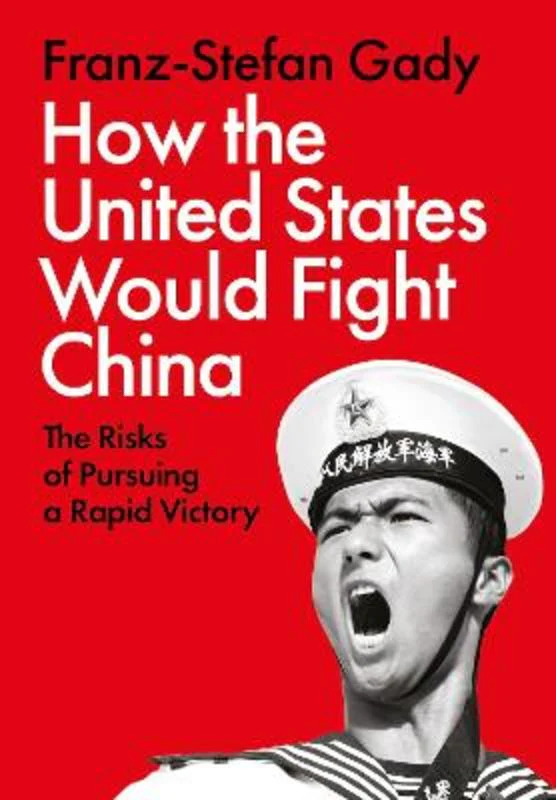
How the United States Would Fight China
How the United States Would Fight China
Assesses the substantial risk of strategic defeat for Washington in any war with China.
This is a detailed analysis of how the United States intends to fight a war against the People's Republic of China and why it risks strategic defeat based on its doctrine, force structure and general 'way of war'. Franz-Stefan Gady contends that the US military's current approach to a potential war over Taiwan is flawed, relying heavily both on achieving rapid information superiority and on a decisive victory. This is unlikely to succeed, and may increase the risk of nuclear escalation between the world's only genuine superpowers.
A US-China war would more likely be characterised by prolonged attrition across multiple domains (cyber, space, air, sea and land) a conflict for which America's military and society are ill-prepared. The US also lacks a viable blueprint, the military forces or the industrial capacity for a long war of attrition. This deficiency stems from a military culture prioritising advanced technology over mass, and the lack of political will or public readiness for the sacrifices such a conflict would require.
Gady's research and analysis, both of the highest order, reveal the significant risk of strategic defeat for the United States in a potential conflict with China, whether in the 2020s or 2030s.
Product Information
Product Information
Shipping & Returns
Shipping & Returns
Description
Assesses the substantial risk of strategic defeat for Washington in any war with China.
This is a detailed analysis of how the United States intends to fight a war against the People's Republic of China and why it risks strategic defeat based on its doctrine, force structure and general 'way of war'. Franz-Stefan Gady contends that the US military's current approach to a potential war over Taiwan is flawed, relying heavily both on achieving rapid information superiority and on a decisive victory. This is unlikely to succeed, and may increase the risk of nuclear escalation between the world's only genuine superpowers.
A US-China war would more likely be characterised by prolonged attrition across multiple domains (cyber, space, air, sea and land) a conflict for which America's military and society are ill-prepared. The US also lacks a viable blueprint, the military forces or the industrial capacity for a long war of attrition. This deficiency stems from a military culture prioritising advanced technology over mass, and the lack of political will or public readiness for the sacrifices such a conflict would require.
Gady's research and analysis, both of the highest order, reveal the significant risk of strategic defeat for the United States in a potential conflict with China, whether in the 2020s or 2030s.