
The Consecration of the National Cemetary at Gettysburg (Easton Press Limited Edition)
LINCOLN, Abraham. The Consecration of the National Cemetery at Gettysburg. Norwalk, Connecticut: The Easton Press, 2013.
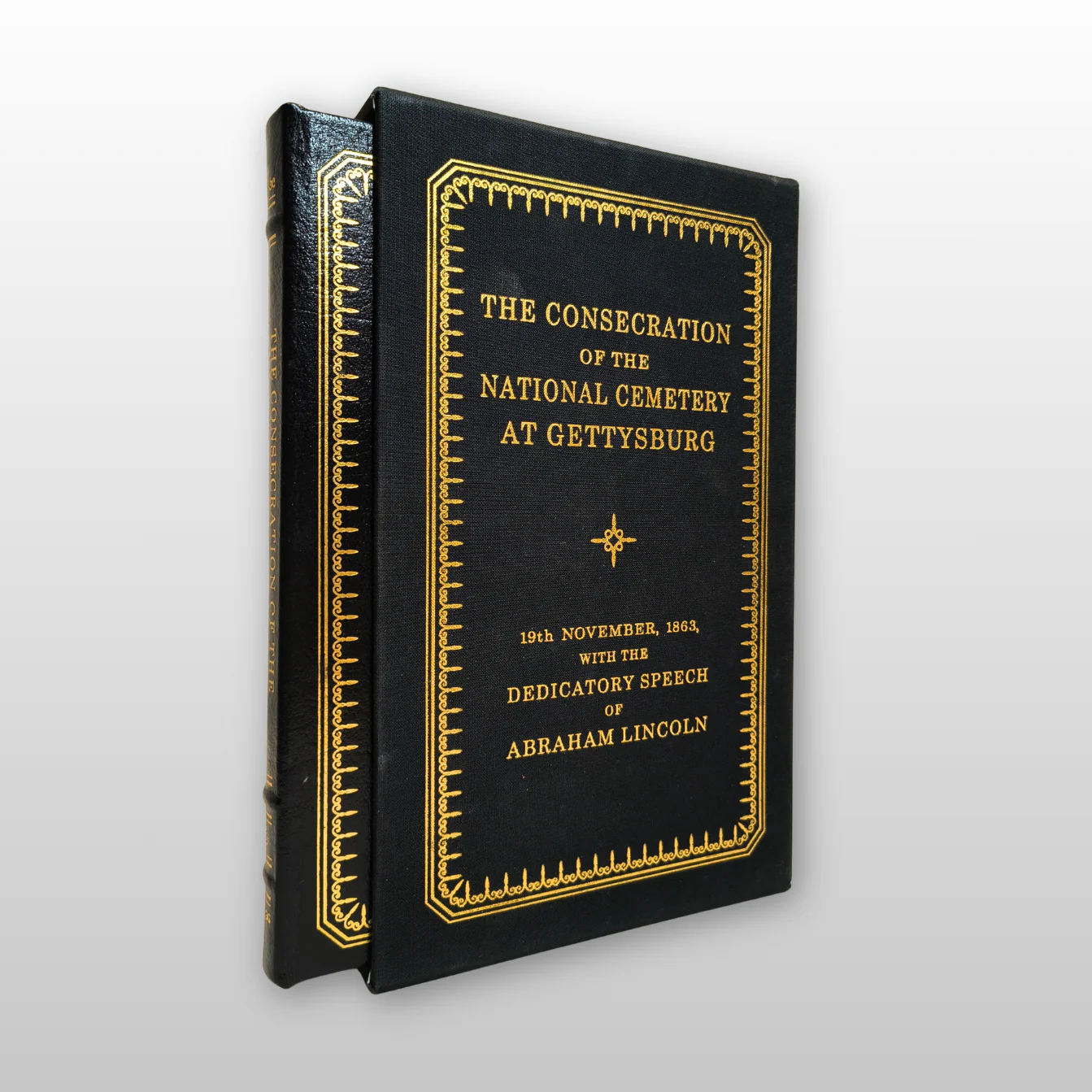
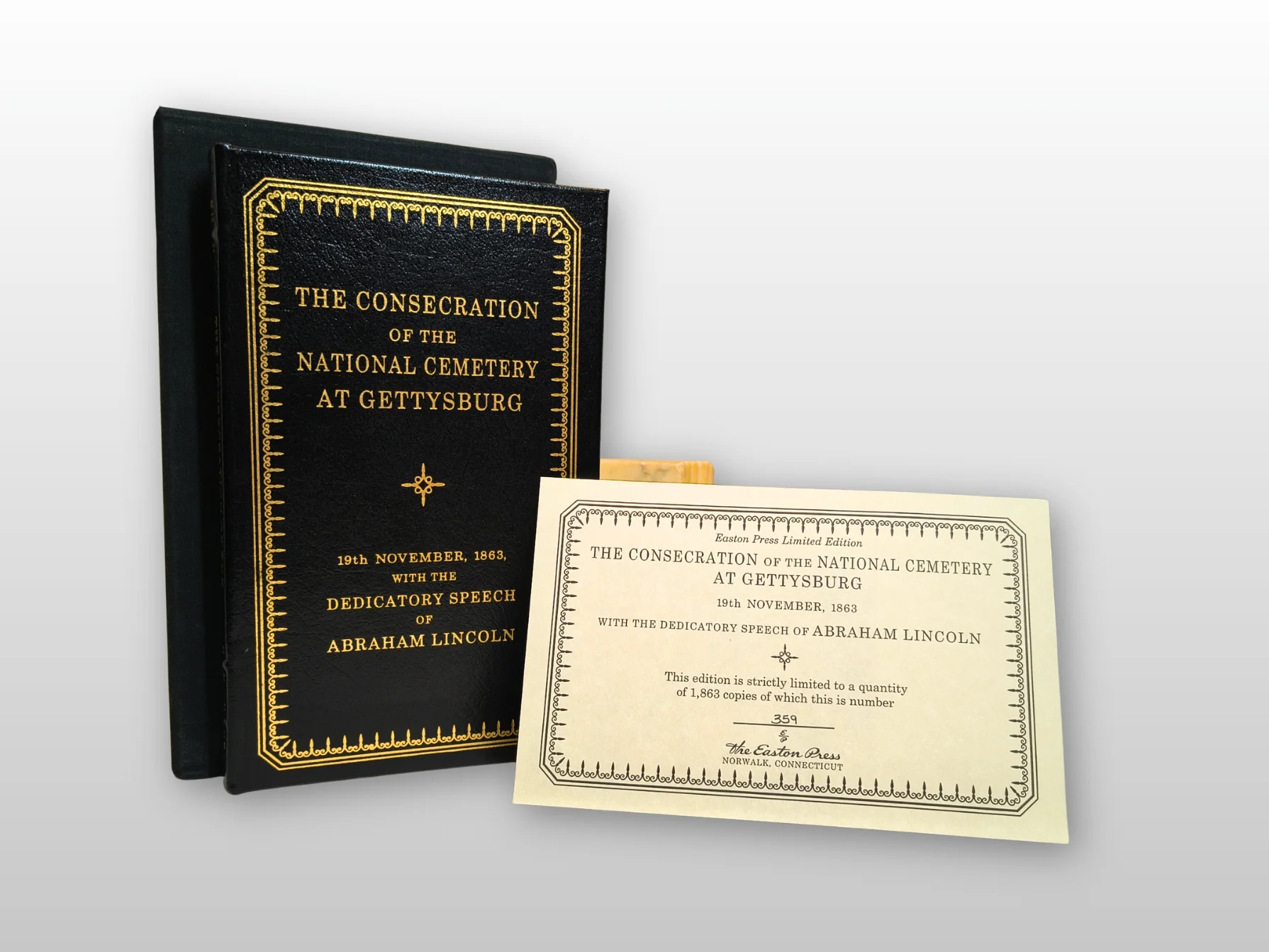
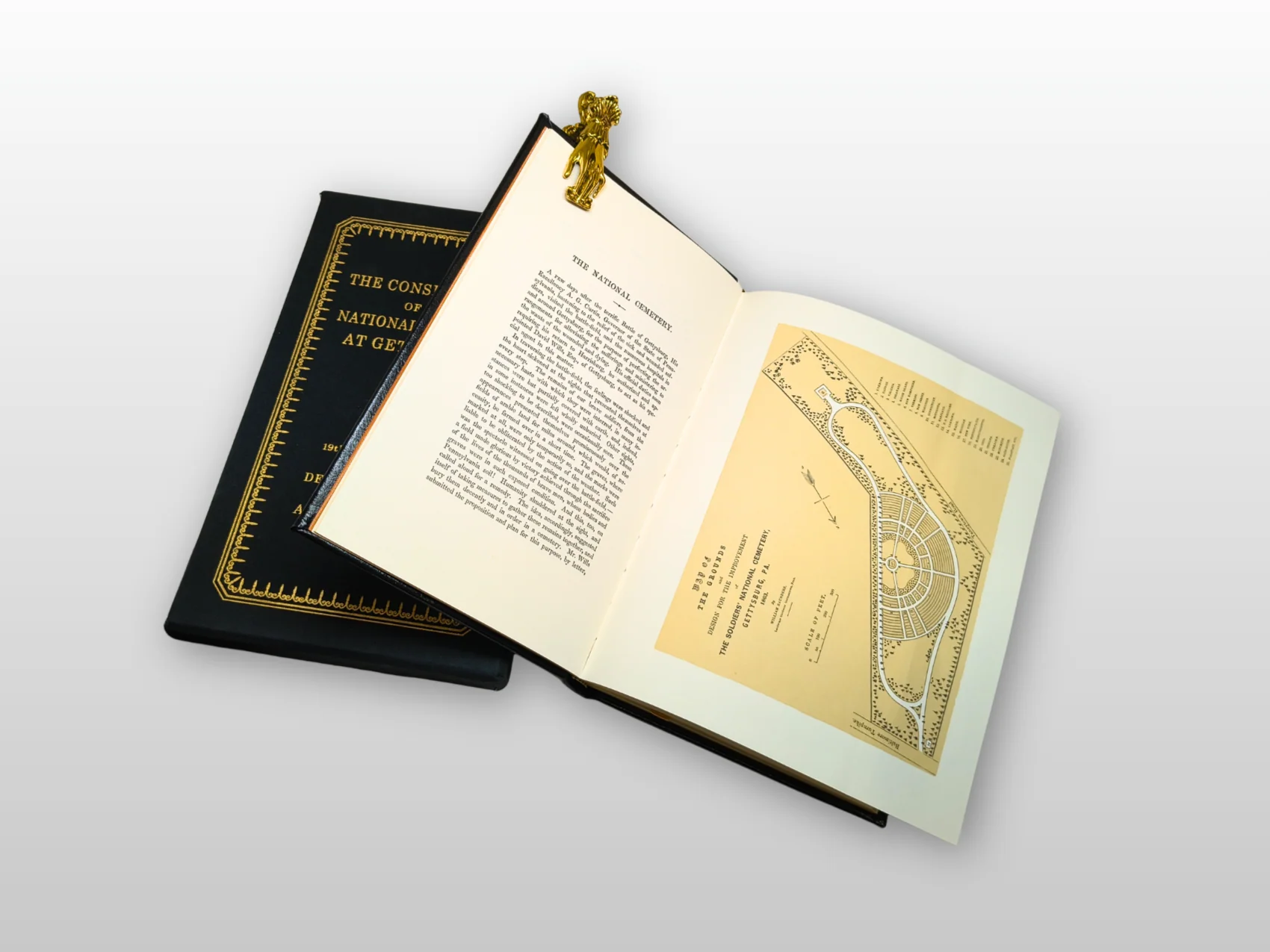
Octavo. Full black leather. Spine with raised bands, 22-carat gilt accents. Gilt design and lettering to covers. All edges gilt. Moiré silk endpapers. Satin ribbon page marker. Cloth slipcase with gilt titling. Easton Press Limited Edition. Limited to 1,863 numbered copies, this being number 359. Contains limitation certificate and bookplate (unadhered). Facsimile after the first publication of Lincoln's address: Address of Hon. Edward Everett at the Consecration of the National Cemetery at Gettysburg, Boston: Little, Brown and Company, 1864.
On the afternoon of 19 November 1863, four and a half months after the Battle of Gettysburg had killed or wounded more than fifty thousand men across three days on the fields of southern Pennsylvania, President Abraham Lincoln rose to speak at the consecration of the Soldiers' National Cemetery on Cemetery Hill. He had been invited to offer "a few appropriate remarks" following the principal oration of the day, which had been delivered by Edward Everett — former president of Harvard, former Secretary of State and Senator, the most celebrated public speaker in America. Everett had spoken for two hours. Lincoln spoke for two minutes.
The text Lincoln delivered that day — two hundred and seventy-two words in the version he subsequently wrote out and signed for lithographic reproduction — is among the most studied and most admired short pieces of prose in the English language. It reframed the Civil War not as a constitutional crisis about the rights of states but as a test of whether a nation "conceived in Liberty, and dedicated to the proposition that all men are created equal" could survive; it proposed that the dead of Gettysburg had through their sacrifice consecrated the ground in a way that no ceremony could add to or diminish; and it redefined the purpose of the war in terms that pointed toward emancipation and a new founding. Garry Wills, in his 1992 study Lincoln at Gettysburg, demonstrated that the address constitutes a deliberate rewriting of the constitutional inheritance in Periclean terms — that Lincoln, in two minutes, had quietly transformed what the nation understood itself to be.
The first book publication of Lincoln's address appeared in 1864, in the volume compiled by Edward Everett for the benefit of the cemetery monument fund: Address of Hon. Edward Everett at the Consecration of the National Cemetery at Gettysburg, published by Little, Brown and Company of Boston. This is the publication to which the Easton Press edition of 2013 refers — produced in the sesquicentennial year of the address, limited to a deliberately resonant 1,863 numbered copies, and presented in a black leather binding with matching cloth slipcase.
Near fine. Some minor superficial markings to slipcase and covers; otherwise fine throughout.
This book is currently not on display in store. If you would like more information or to arrange a viewing, please contact: [email protected]
Catalogue Number: HH000593
Product Information
Product Information
Shipping & Returns
Shipping & Returns
The Consecration of the National Cemetary at Gettysburg (Easton Press Limited Edition)
The Consecration of the National Cemetary at Gettysburg (Easton Press Limited Edition)
LINCOLN, Abraham. The Consecration of the National Cemetery at Gettysburg. Norwalk, Connecticut: The Easton Press, 2013.
Octavo. Full black leather. Spine with raised bands, 22-carat gilt accents. Gilt design and lettering to covers. All edges gilt. Moiré silk endpapers. Satin ribbon page marker. Cloth slipcase with gilt titling. Easton Press Limited Edition. Limited to 1,863 numbered copies, this being number 359. Contains limitation certificate and bookplate (unadhered). Facsimile after the first publication of Lincoln's address: Address of Hon. Edward Everett at the Consecration of the National Cemetery at Gettysburg, Boston: Little, Brown and Company, 1864.
On the afternoon of 19 November 1863, four and a half months after the Battle of Gettysburg had killed or wounded more than fifty thousand men across three days on the fields of southern Pennsylvania, President Abraham Lincoln rose to speak at the consecration of the Soldiers' National Cemetery on Cemetery Hill. He had been invited to offer "a few appropriate remarks" following the principal oration of the day, which had been delivered by Edward Everett — former president of Harvard, former Secretary of State and Senator, the most celebrated public speaker in America. Everett had spoken for two hours. Lincoln spoke for two minutes.
The text Lincoln delivered that day — two hundred and seventy-two words in the version he subsequently wrote out and signed for lithographic reproduction — is among the most studied and most admired short pieces of prose in the English language. It reframed the Civil War not as a constitutional crisis about the rights of states but as a test of whether a nation "conceived in Liberty, and dedicated to the proposition that all men are created equal" could survive; it proposed that the dead of Gettysburg had through their sacrifice consecrated the ground in a way that no ceremony could add to or diminish; and it redefined the purpose of the war in terms that pointed toward emancipation and a new founding. Garry Wills, in his 1992 study Lincoln at Gettysburg, demonstrated that the address constitutes a deliberate rewriting of the constitutional inheritance in Periclean terms — that Lincoln, in two minutes, had quietly transformed what the nation understood itself to be.
The first book publication of Lincoln's address appeared in 1864, in the volume compiled by Edward Everett for the benefit of the cemetery monument fund: Address of Hon. Edward Everett at the Consecration of the National Cemetery at Gettysburg, published by Little, Brown and Company of Boston. This is the publication to which the Easton Press edition of 2013 refers — produced in the sesquicentennial year of the address, limited to a deliberately resonant 1,863 numbered copies, and presented in a black leather binding with matching cloth slipcase.
Near fine. Some minor superficial markings to slipcase and covers; otherwise fine throughout.
This book is currently not on display in store. If you would like more information or to arrange a viewing, please contact: [email protected]
Catalogue Number: HH000593
Original: $62.85
-65%$62.85
$22.00Product Information
Product Information
Shipping & Returns
Shipping & Returns
Description
LINCOLN, Abraham. The Consecration of the National Cemetery at Gettysburg. Norwalk, Connecticut: The Easton Press, 2013.
Octavo. Full black leather. Spine with raised bands, 22-carat gilt accents. Gilt design and lettering to covers. All edges gilt. Moiré silk endpapers. Satin ribbon page marker. Cloth slipcase with gilt titling. Easton Press Limited Edition. Limited to 1,863 numbered copies, this being number 359. Contains limitation certificate and bookplate (unadhered). Facsimile after the first publication of Lincoln's address: Address of Hon. Edward Everett at the Consecration of the National Cemetery at Gettysburg, Boston: Little, Brown and Company, 1864.
On the afternoon of 19 November 1863, four and a half months after the Battle of Gettysburg had killed or wounded more than fifty thousand men across three days on the fields of southern Pennsylvania, President Abraham Lincoln rose to speak at the consecration of the Soldiers' National Cemetery on Cemetery Hill. He had been invited to offer "a few appropriate remarks" following the principal oration of the day, which had been delivered by Edward Everett — former president of Harvard, former Secretary of State and Senator, the most celebrated public speaker in America. Everett had spoken for two hours. Lincoln spoke for two minutes.
The text Lincoln delivered that day — two hundred and seventy-two words in the version he subsequently wrote out and signed for lithographic reproduction — is among the most studied and most admired short pieces of prose in the English language. It reframed the Civil War not as a constitutional crisis about the rights of states but as a test of whether a nation "conceived in Liberty, and dedicated to the proposition that all men are created equal" could survive; it proposed that the dead of Gettysburg had through their sacrifice consecrated the ground in a way that no ceremony could add to or diminish; and it redefined the purpose of the war in terms that pointed toward emancipation and a new founding. Garry Wills, in his 1992 study Lincoln at Gettysburg, demonstrated that the address constitutes a deliberate rewriting of the constitutional inheritance in Periclean terms — that Lincoln, in two minutes, had quietly transformed what the nation understood itself to be.
The first book publication of Lincoln's address appeared in 1864, in the volume compiled by Edward Everett for the benefit of the cemetery monument fund: Address of Hon. Edward Everett at the Consecration of the National Cemetery at Gettysburg, published by Little, Brown and Company of Boston. This is the publication to which the Easton Press edition of 2013 refers — produced in the sesquicentennial year of the address, limited to a deliberately resonant 1,863 numbered copies, and presented in a black leather binding with matching cloth slipcase.
Near fine. Some minor superficial markings to slipcase and covers; otherwise fine throughout.
This book is currently not on display in store. If you would like more information or to arrange a viewing, please contact: [email protected]
Catalogue Number: HH000593