The Known World (Easton Press Signed Collector's Edition)
JONES, Edward P. The Known World. Norwalk, Connecticut: The Easton Press, 2013.
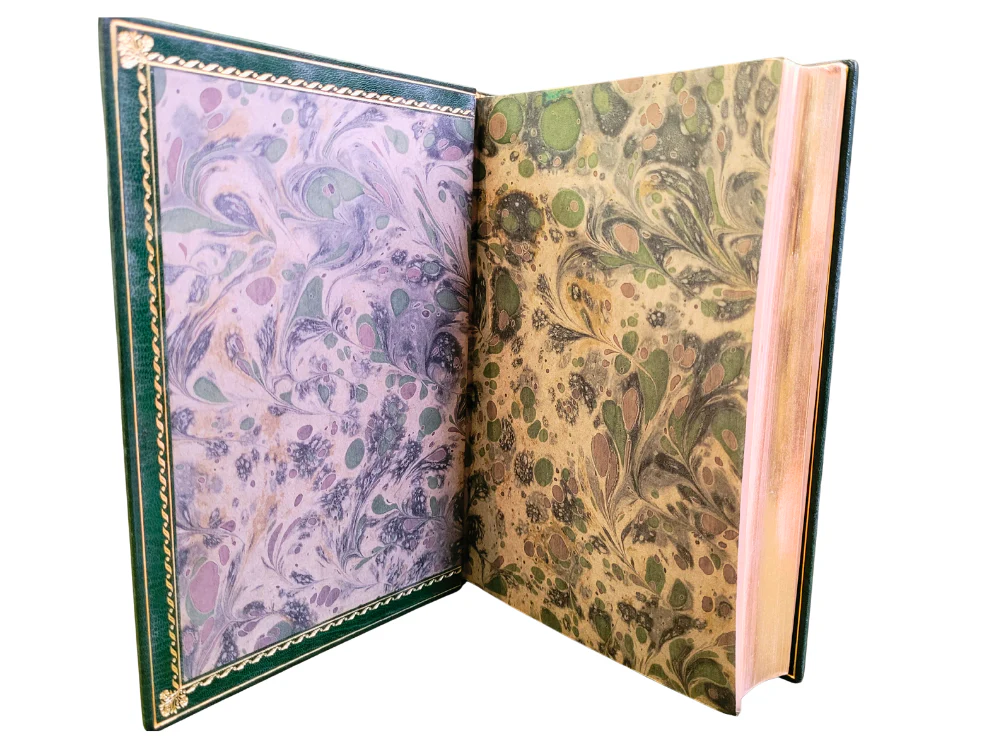
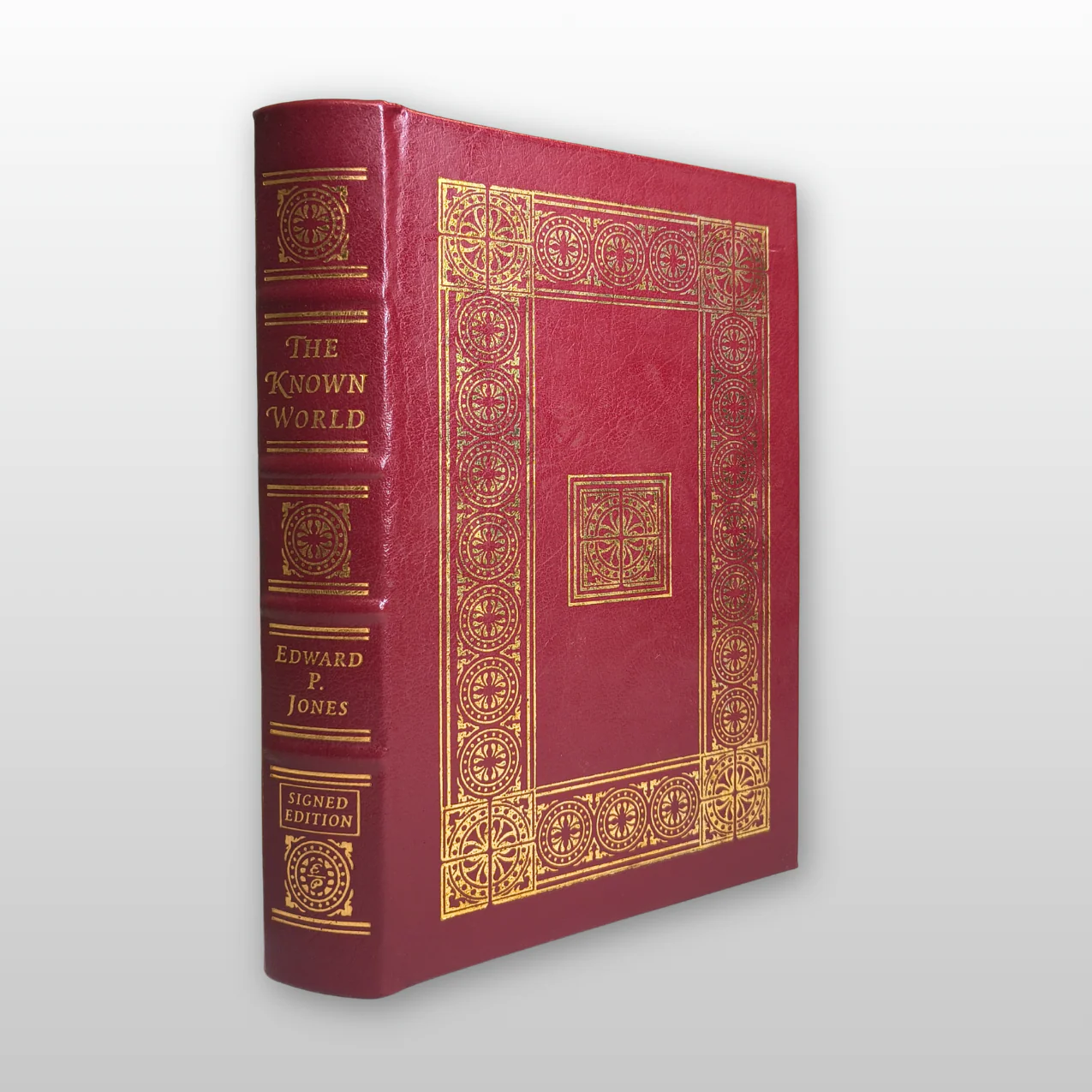
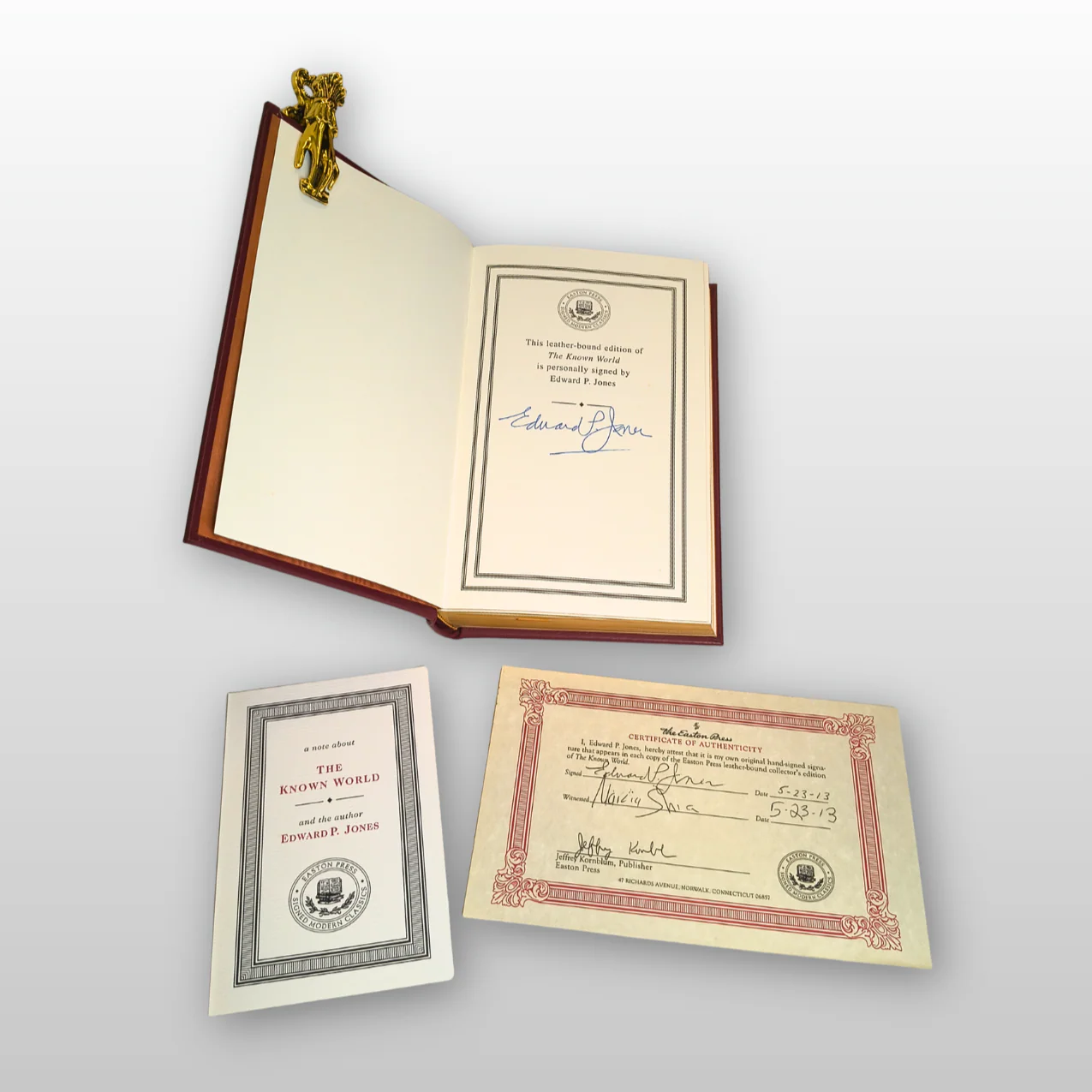
Octavo. Full red leather. Spine with four raised bands, 22-carat gilt accents. Gilt lettering and design to covers. All edges gilt. Moiré silk endpapers. Tan satin ribbon page marker. 388 pp. Signed Collector's Edition. Signed by the author on the special signature page. Includes signed Certificate of Authenticity and edition card. Originally published New York: Amistad/HarperCollins, 2003.
Edward P. Jones (b. 1950) was born and raised in Washington, D.C., the son of parents who had migrated from Virginia; his mother was illiterate. He attended the College of the Holy Cross on scholarship and took his MFA at the University of Virginia. His first collection of stories, Lost in the City (1992), won the PEN/Hemingway Award and was shortlisted for the National Book Award. His second collection, All Aunt Hagar's Children (2006), was a finalist for the PEN/Faulkner Award. His total published output — two story collections and one novel — is among the most economical bodies of work ever to have generated such critical recognition, and the novel is The Known World.
Set in Manchester County, Virginia, in the two decades before the Civil War, the novel centres on a fact that is historical rather than invented: that a small number of free Black men and women in the antebellum South owned enslaved people themselves. Henry Townsend is one of them — a former slave who was purchased and freed by his parents, who had bought their own freedom before him, and who has then, by the logic of the only economic system available to him, acquired enslaved workers for his farm. When Henry dies young, leaving his wife Caldonia to manage a world held together by his particular authority, the novel's real subject begins to emerge: the way in which a system of absolute power over other human beings corrupts everything it touches, regardless of the race or the intentions of whoever holds that power.
Jones's narrative method is its own achievement. He moves constantly and without announcement between time periods — backwards into the antebellum past, forward into the Reconstruction era, occasionally forward into the early twentieth century — creating an effect of total temporal freedom that makes the novel feel not like a story unfolding but like a world being gradually revealed. The technique allows him to show consequences before causes, to let the reader know what will befall a character long before we see what has brought them there, and to build a portrait of an entire community — Black and white, free and enslaved, the powerful and the powerless — of encyclopaedic richness.
The Known World won the 2004 Pulitzer Prize for Fiction, the National Book Critics Circle Award, the International IMPAC Dublin Literary Award, and the Lannan Literary Award; Jones also received a MacArthur Fellowship in 2004. The New York Times ranked it first on its list of the 100 best novels of the twenty-first century — its first twenty-five years.
Near fine. Some very faint markings along gilt edges; otherwise fine throughout.
This book is currently not on display in store. If you would like more information or to arrange a viewing, please contact: [email protected]
Catalogue Number: HH000522
Product Information
Product Information
Shipping & Returns
Shipping & Returns
The Known World (Easton Press Signed Collector's Edition)
The Known World (Easton Press Signed Collector's Edition)
JONES, Edward P. The Known World. Norwalk, Connecticut: The Easton Press, 2013.
Octavo. Full red leather. Spine with four raised bands, 22-carat gilt accents. Gilt lettering and design to covers. All edges gilt. Moiré silk endpapers. Tan satin ribbon page marker. 388 pp. Signed Collector's Edition. Signed by the author on the special signature page. Includes signed Certificate of Authenticity and edition card. Originally published New York: Amistad/HarperCollins, 2003.
Edward P. Jones (b. 1950) was born and raised in Washington, D.C., the son of parents who had migrated from Virginia; his mother was illiterate. He attended the College of the Holy Cross on scholarship and took his MFA at the University of Virginia. His first collection of stories, Lost in the City (1992), won the PEN/Hemingway Award and was shortlisted for the National Book Award. His second collection, All Aunt Hagar's Children (2006), was a finalist for the PEN/Faulkner Award. His total published output — two story collections and one novel — is among the most economical bodies of work ever to have generated such critical recognition, and the novel is The Known World.
Set in Manchester County, Virginia, in the two decades before the Civil War, the novel centres on a fact that is historical rather than invented: that a small number of free Black men and women in the antebellum South owned enslaved people themselves. Henry Townsend is one of them — a former slave who was purchased and freed by his parents, who had bought their own freedom before him, and who has then, by the logic of the only economic system available to him, acquired enslaved workers for his farm. When Henry dies young, leaving his wife Caldonia to manage a world held together by his particular authority, the novel's real subject begins to emerge: the way in which a system of absolute power over other human beings corrupts everything it touches, regardless of the race or the intentions of whoever holds that power.
Jones's narrative method is its own achievement. He moves constantly and without announcement between time periods — backwards into the antebellum past, forward into the Reconstruction era, occasionally forward into the early twentieth century — creating an effect of total temporal freedom that makes the novel feel not like a story unfolding but like a world being gradually revealed. The technique allows him to show consequences before causes, to let the reader know what will befall a character long before we see what has brought them there, and to build a portrait of an entire community — Black and white, free and enslaved, the powerful and the powerless — of encyclopaedic richness.
The Known World won the 2004 Pulitzer Prize for Fiction, the National Book Critics Circle Award, the International IMPAC Dublin Literary Award, and the Lannan Literary Award; Jones also received a MacArthur Fellowship in 2004. The New York Times ranked it first on its list of the 100 best novels of the twenty-first century — its first twenty-five years.
Near fine. Some very faint markings along gilt edges; otherwise fine throughout.
This book is currently not on display in store. If you would like more information or to arrange a viewing, please contact: [email protected]
Catalogue Number: HH000522
Original: $72.85
-65%$72.85
$25.50Product Information
Product Information
Shipping & Returns
Shipping & Returns
Description
JONES, Edward P. The Known World. Norwalk, Connecticut: The Easton Press, 2013.
Octavo. Full red leather. Spine with four raised bands, 22-carat gilt accents. Gilt lettering and design to covers. All edges gilt. Moiré silk endpapers. Tan satin ribbon page marker. 388 pp. Signed Collector's Edition. Signed by the author on the special signature page. Includes signed Certificate of Authenticity and edition card. Originally published New York: Amistad/HarperCollins, 2003.
Edward P. Jones (b. 1950) was born and raised in Washington, D.C., the son of parents who had migrated from Virginia; his mother was illiterate. He attended the College of the Holy Cross on scholarship and took his MFA at the University of Virginia. His first collection of stories, Lost in the City (1992), won the PEN/Hemingway Award and was shortlisted for the National Book Award. His second collection, All Aunt Hagar's Children (2006), was a finalist for the PEN/Faulkner Award. His total published output — two story collections and one novel — is among the most economical bodies of work ever to have generated such critical recognition, and the novel is The Known World.
Set in Manchester County, Virginia, in the two decades before the Civil War, the novel centres on a fact that is historical rather than invented: that a small number of free Black men and women in the antebellum South owned enslaved people themselves. Henry Townsend is one of them — a former slave who was purchased and freed by his parents, who had bought their own freedom before him, and who has then, by the logic of the only economic system available to him, acquired enslaved workers for his farm. When Henry dies young, leaving his wife Caldonia to manage a world held together by his particular authority, the novel's real subject begins to emerge: the way in which a system of absolute power over other human beings corrupts everything it touches, regardless of the race or the intentions of whoever holds that power.
Jones's narrative method is its own achievement. He moves constantly and without announcement between time periods — backwards into the antebellum past, forward into the Reconstruction era, occasionally forward into the early twentieth century — creating an effect of total temporal freedom that makes the novel feel not like a story unfolding but like a world being gradually revealed. The technique allows him to show consequences before causes, to let the reader know what will befall a character long before we see what has brought them there, and to build a portrait of an entire community — Black and white, free and enslaved, the powerful and the powerless — of encyclopaedic richness.
The Known World won the 2004 Pulitzer Prize for Fiction, the National Book Critics Circle Award, the International IMPAC Dublin Literary Award, and the Lannan Literary Award; Jones also received a MacArthur Fellowship in 2004. The New York Times ranked it first on its list of the 100 best novels of the twenty-first century — its first twenty-five years.
Near fine. Some very faint markings along gilt edges; otherwise fine throughout.
This book is currently not on display in store. If you would like more information or to arrange a viewing, please contact: [email protected]
Catalogue Number: HH000522